
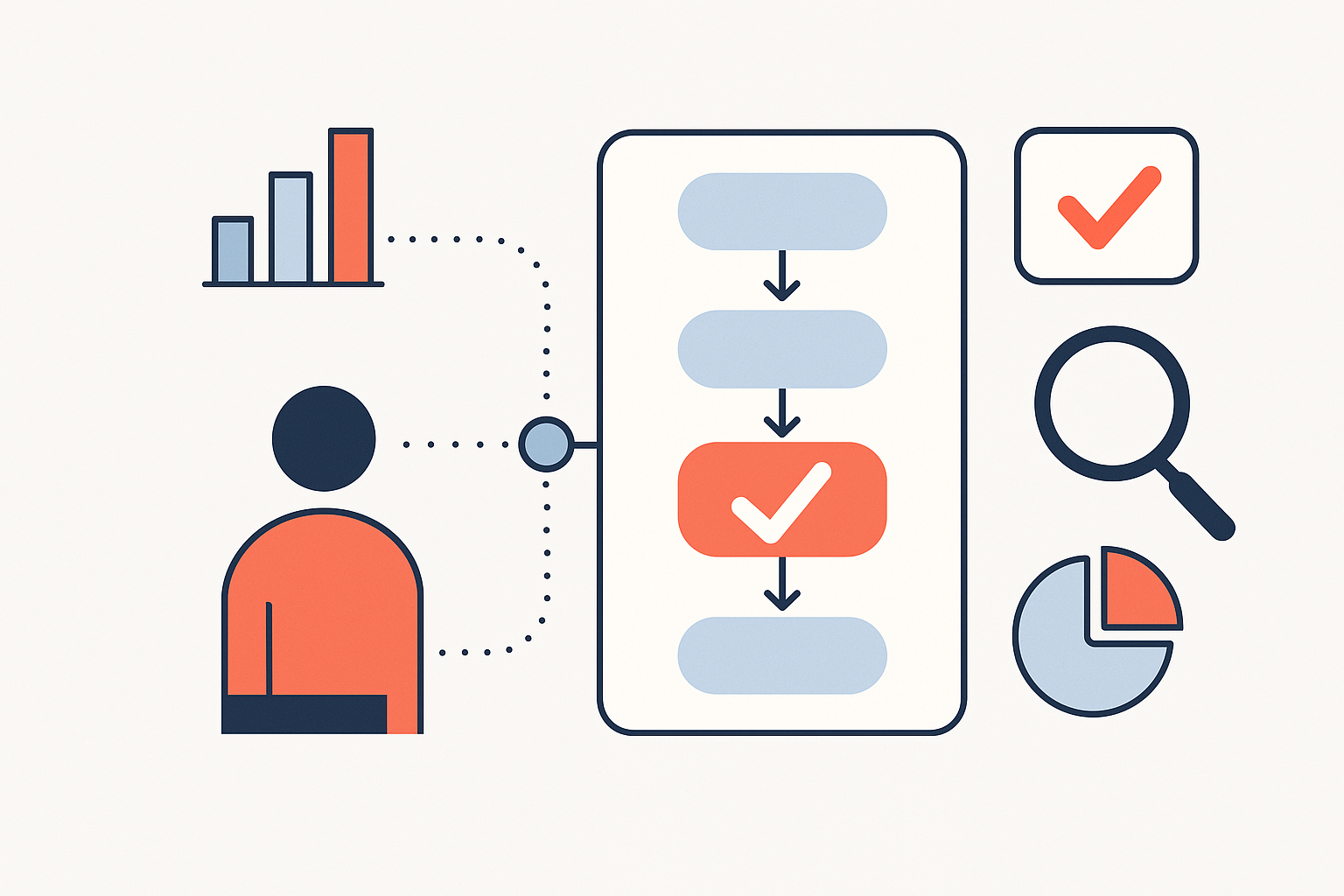
You shipped the product. People are signing up. But somewhere between "Create account" and "I use this every day," they quietly leak out — and you have no idea where.
The feedback that would tell you is real, it's just scattered. Three support emails, a Slack DM, two Reddit comments, a half-finished survey export, and a voice memo you made after a customer call. You know the answer is in there. You just don't have a week to read it all, color-code a Miro board, and build a journey map that's stale by the time you finish.
Nielsen Norman Group has long argued that most product fixes miss because teams misread their users, not because the fix was hard to build. For a solo founder or a two-person team, that risk is sharper: there's no UX researcher to hand this to. It's you, at 11pm, guessing.
Here's the part that changed. You don't build the journey map anymore. You describe it, and Dotallio assembles it.
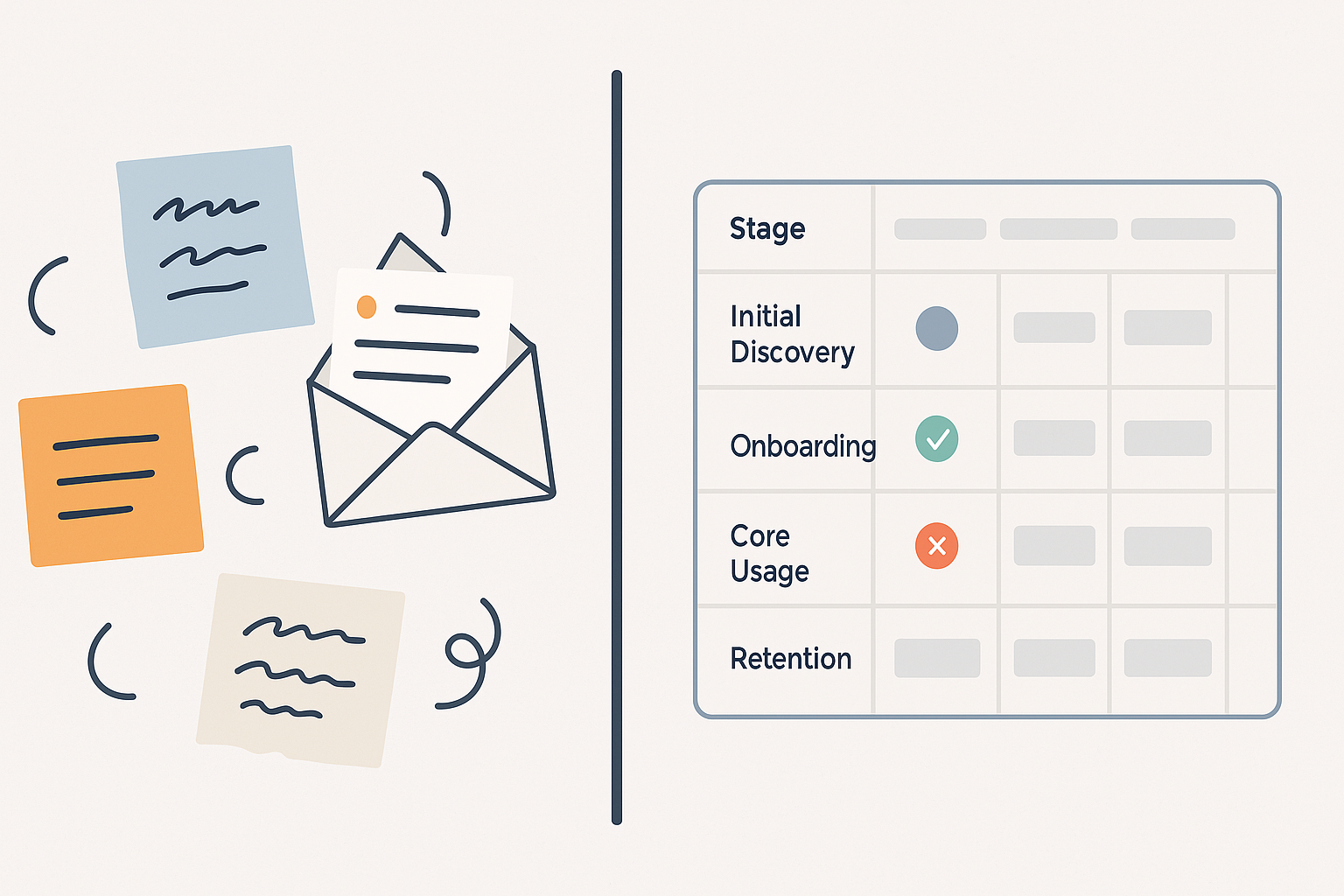
You don't build it — you describe it
The old way of doing this in any tool — including the old Dotallio — meant you set everything up by hand. Create a board. Add a "Stage" column. Add a "Sentiment" column. Add a "Touchpoint" column. Decide on a dropdown of values. Then paste, sort, tag, and repeat for every piece of feedback.
Chat-first Dotallio flips that. You open a chat, tell it what you're trying to understand, and it creates the board, picks the columns, drops in the structure, and gives you a starting view — before you've touched a single setting. Then everything it makes is a versionable, editable artifact: you can refine it, roll back a change, and share it with a teammate or a client.
The result is that "map the user journey" stops being a project and becomes a conversation.
A real session in Dotallio
Here's roughly how a session looks. Each prompt is something you'd actually type.
Start with the structure.
Create a user journey board for my SaaS onboarding. Stages from first visit to activated user, with columns for touchpoint, what the user is trying to do, friction points, sentiment, and a fix priority.
Dotallio builds the board with the stages as rows (Discovery, Sign-up, First setup, First value, Habit), the right column types, a sentiment dropdown, and a priority field — plus a couple of sample rows so you can see the shape immediately. No column-by-column setup.
Now feed it the mess. Paste your raw feedback straight into the chat, or drop in a CSV export of survey responses. You can even snap a photo of a whiteboard from your last customer call — vision OCR reads it and structures it.
Here are 40 support emails and survey replies. Sort each into the right journey stage, tag the sentiment, and pull out the specific friction point in a few words.
Dotallio reads the batch, assigns each note to a stage, fills the sentiment column, and writes a tight friction summary in plain language. What was an afternoon of manual tagging lands as filled-in rows.
Ask it where the pain actually is.
Which stage has the most negative sentiment, and what's the common thread? Make a chart.
You get an answer grounded in the rows you just structured, plus a pie or flow chart artifact showing the friction concentration. If account setup is bleeding people, you'll see it — not feel it.
Turn the insight into a deliverable.
Write a one-page journey summary doc for my cofounder: the three worst friction points, the evidence behind each, and a recommended fix order.
Dotallio produces a clean doc artifact that pulls directly from the board data. Edit it, share it on a workspace or public link, and it stays tied to the rows underneath.
Four prompts in, you have a structured board, a chart, and a shareable summary — and you never opened a column editor.
Keeping the map alive
A journey map's real problem isn't building it once. It's that it's outdated by next month.
This is where the chat-first model earns its keep, because the board it built is a real board with real Dotallio power underneath:
- AI-filled columns. Add a "Suggested fix" column and ask Dotallio to fill it across every row in bulk, reading each row's friction note. New feedback comes in next week? Paste it, and ask it to slot in and tag — same prompt, no re-setup.
- Smart Workflows with live research. Point Dotallio at a stage and let it run web research to enrich it — pull common drop-off causes for that step, competitor onboarding patterns, or benchmarks — and write them into the rows. You can trigger this on demand, from a button, or when a new feedback row lands via a webhook from your support tool.
- Formulas you'd actually use. A simple
COUNTIFover the sentiment column gives you a running "negative mentions per stage" tally. AnIFformula flags any stage where negatives cross a threshold. Google Sheets syntax, no plugin. - Versioned artifacts. Every doc, chart, and summary is version-controlled. When you redesign onboarding and re-run the analysis, you keep the old version to compare against — proof your fix moved the number.
The map updates because the data updates, and the data updates because pasting new feedback into a chat is the whole workflow.
What this looks like in real life
Maya runs a scheduling tool solo. Retention was soft and she couldn't name why.
The old version of this would've been a weekend lost to a spreadsheet. Instead she pasted two weeks of support tickets and a survey CSV into a Dotallio chat and asked it to map them onto her onboarding journey. Within a few minutes the board showed one stage — connecting a calendar during setup — soaked in negative sentiment, with the same complaint phrased a dozen ways: the permissions screen scared people off.
She asked for a chart, then a one-page summary doc to think it through. The fix was a single reassuring screen before the permissions prompt. She shipped it, and when the next batch of feedback came in, she pasted it into the same board and watched the negative cluster on that stage thin out — with the old version of the analysis still saved next to the new one for the before-and-after.
No researcher. No new tool to learn. One conversation, kept alive.
Why this is better
- No setup tax. You describe the journey map; Dotallio builds the board, columns, and views. You skip straight to the thinking.
- Messy input is fine. Paste emails, import a CSV, drop a photo of a whiteboard — vision OCR and AI structuring turn it into rows.
- Insight, not just storage. Charts, sentiment tagging, and grounded answers tell you where the friction is, not just where the feedback sits.
- It stays current. AI-filled columns, formulas, and Smart Workflows with live web research keep the map fresh as feedback arrives.
- Everything is a living artifact. Boards, docs, and charts are versioned and shareable — refine them, roll back, and prove your fixes worked.
- Built for one person. No UX team, no budget, no week of manual mapping.
Try it on your own feedback
You don't need a research department to understand your users — you need a way to turn the pile of scattered feedback into a clear picture, fast. Open a chat, describe the journey you want to map, and paste in whatever mess you've got. Dot will take it from there and hand you a board, a chart, and a summary you can actually act on.